Claude
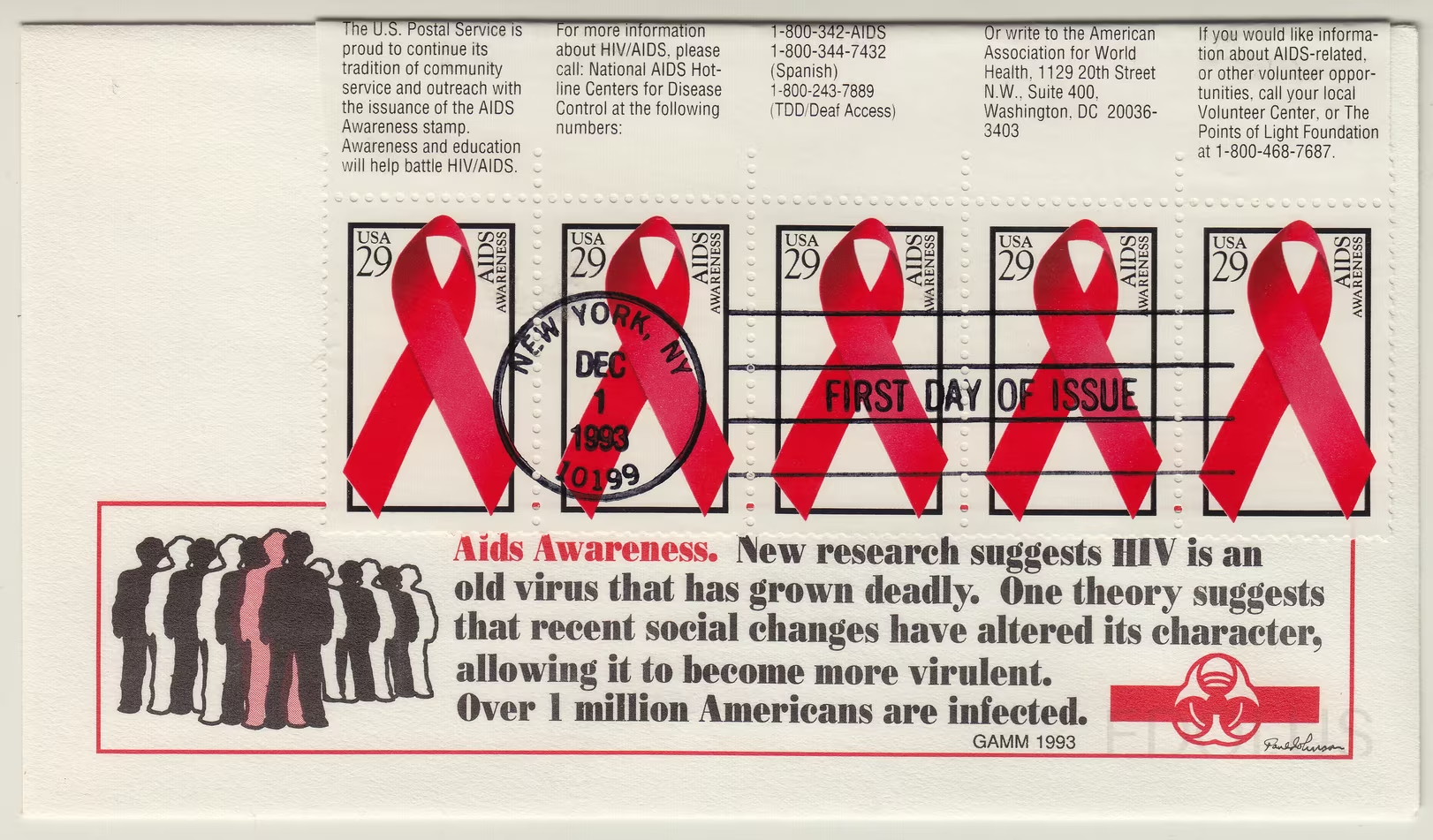
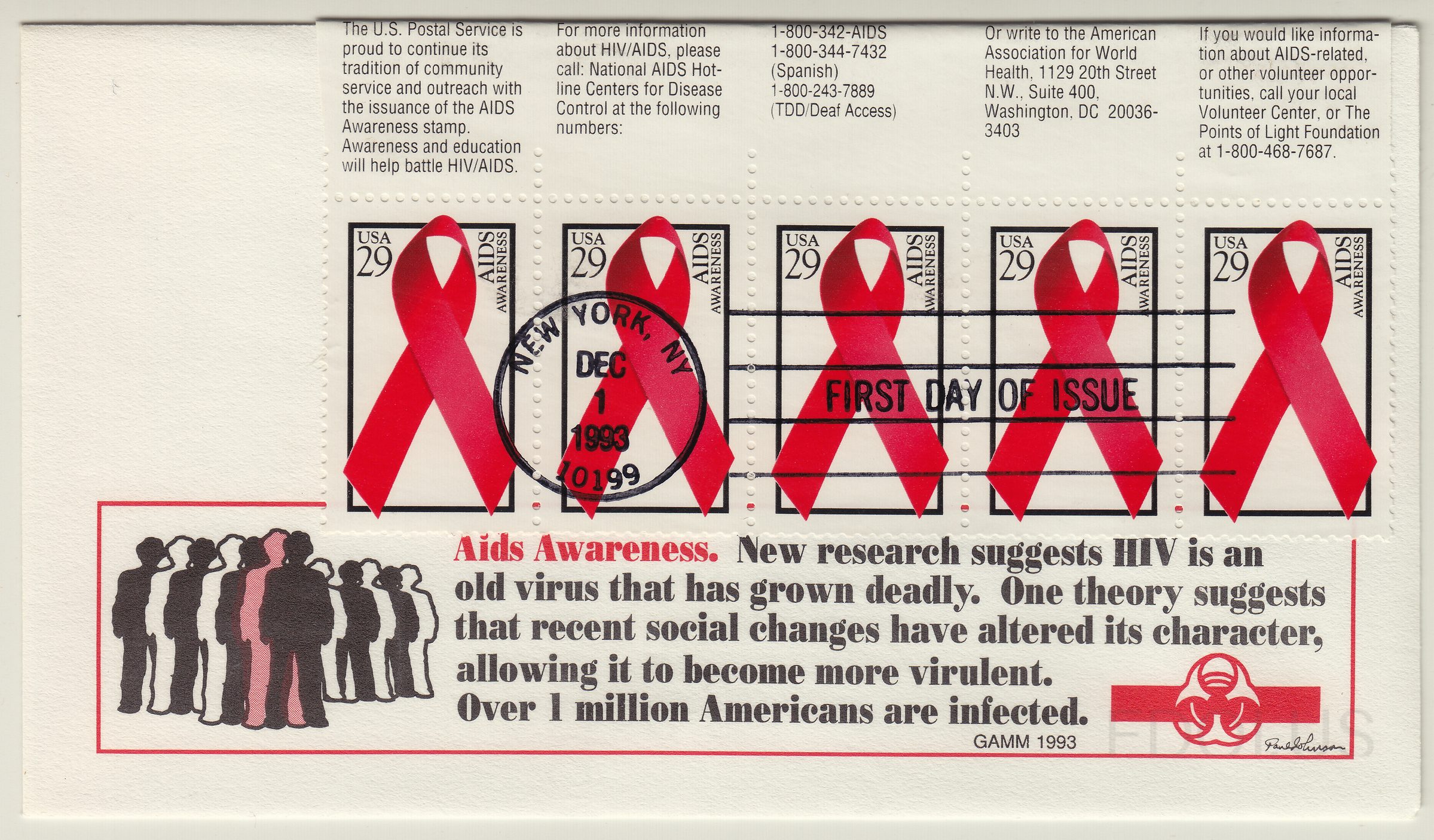
The cachet features a group of silhouetted human figures (in black and pink/red) standing together, representing community affected by HIV/AIDS, printed in a red-bordered box. Five USA 29-cent AIDS Awareness stamps featuring red ribbons are affixed in a block with selvage reading 'FIRST DAY OF ISSUE.' The postmark is a circular hand cancel from New York, NY dated December 1, 1993, ZIP 10199. The cachet text reads: 'AIDS Awareness. New research suggests HIV is an old virus that has grown deadly. One theory suggests that recent social changes have altered its character, allowing it to become more virulent. Over 1 million Americans are infected.' A biohazard symbol appears in red at lower right, credited 'GAMM 1993.'
Mistral
This First Day Cover features five 29-cent AIDS Awareness stamps with a red ribbon symbol, postmarked with a circular 'First Day of Issue' cancellation. The cachet artwork by Gerry Adlman (GAMM Cachets) includes silhouetted human figures in black and pink, representing the affected community, along with educational text about HIV research and a red biohazard symbol. The cover is in excellent condition, with clear and legible text providing information about HIV/AIDS awareness and prevention.
(The automatic summaries sometimes misidentify the postmark as part of the cachet artwork.)