Claude
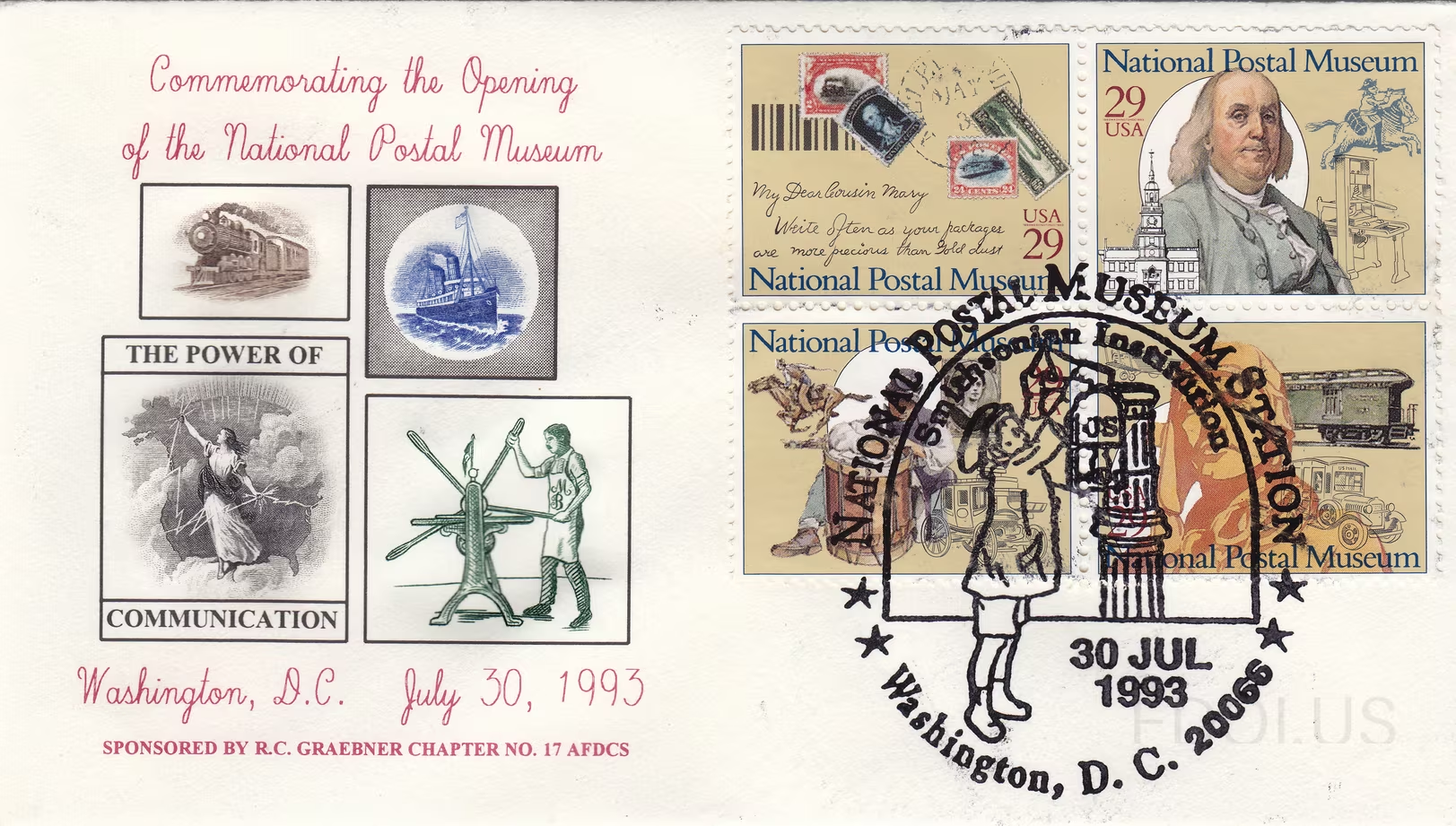
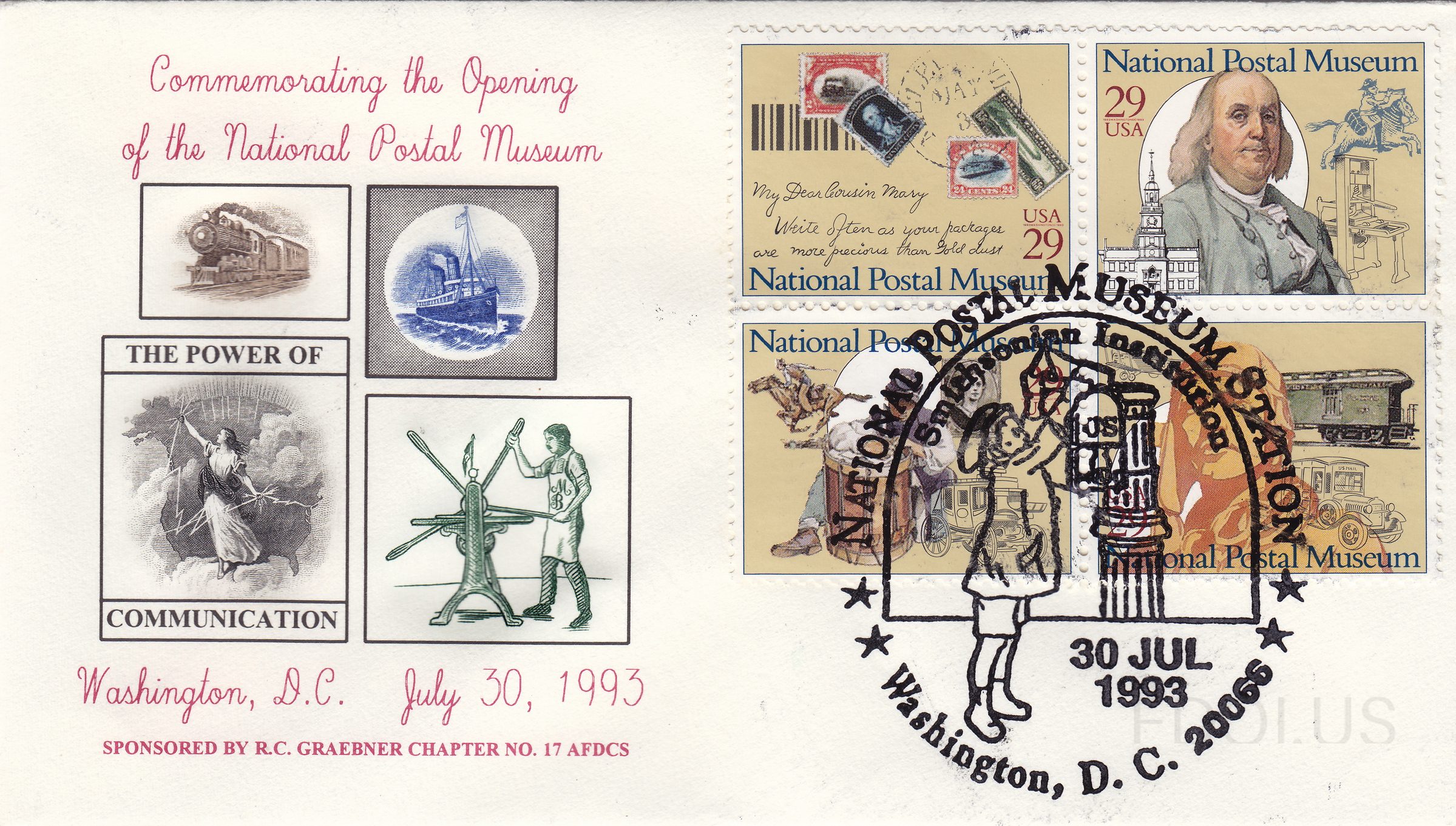
The cachet features black-and-white illustrations of historic communication themes including a steam locomotive, a steamship in a blue circular vignette, a figure labeled 'The Power of Communication' amid lightning bolts, and two workers at a printing press. Text in red reads 'Commemorating the Opening of the National Postal Museum' with 'Washington, D.C. July 30, 1993' below. Four 29-cent USA stamps form a block depicting scenes from the National Postal Museum: a letter with handwriting and vintage stamps, Benjamin Franklin, mail delivery workers, and early automobiles/transportation. The pictorial cancellation shows a postal worker figure and reads 'National Postal Museum Station / Smithsonian Institution / 30 JUL 1993 / Washington, D.C. 20066'.
Mistral
This First Day Cover commemorates the opening of the National Postal Museum on July 30, 1993, in Washington, D.C. The cachet features black-and-white illustrations of historic communication themes: a steam locomotive, steamship, printing press, and a figure symbolizing the 'Power of Communication' with lightning bolts. The stamp block includes four 29-cent stamps depicting postal history subjects, such as handwritten letters, Benjamin Franklin, mail delivery workers, and early automobiles. The pictorial postmark shows a postal worker and includes the date and location of the museum's opening. The cover is in excellent condition with clear artwork and legible text.
(The automatic summaries sometimes misidentify the postmark as part of the cachet artwork.)