Claude
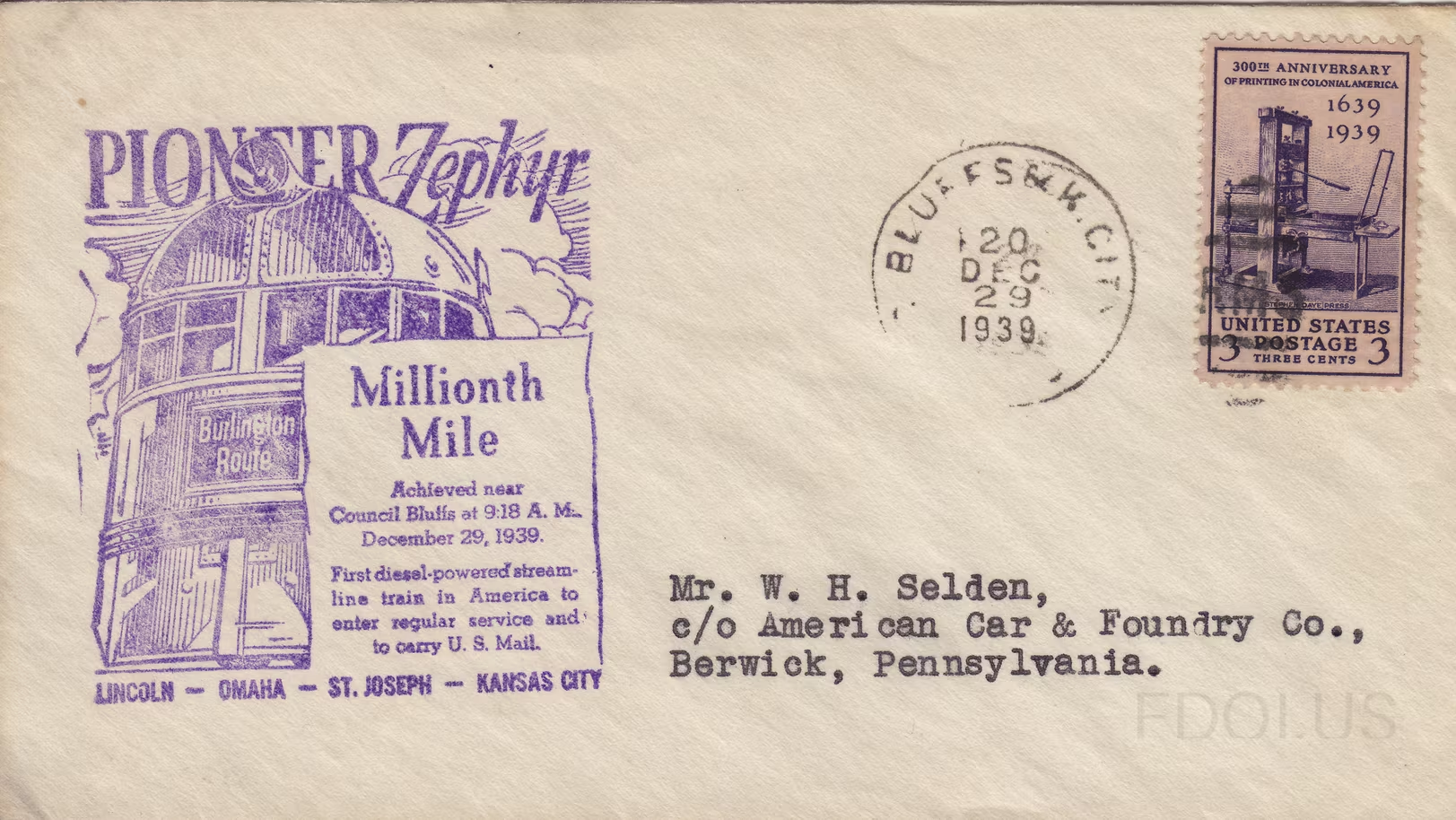
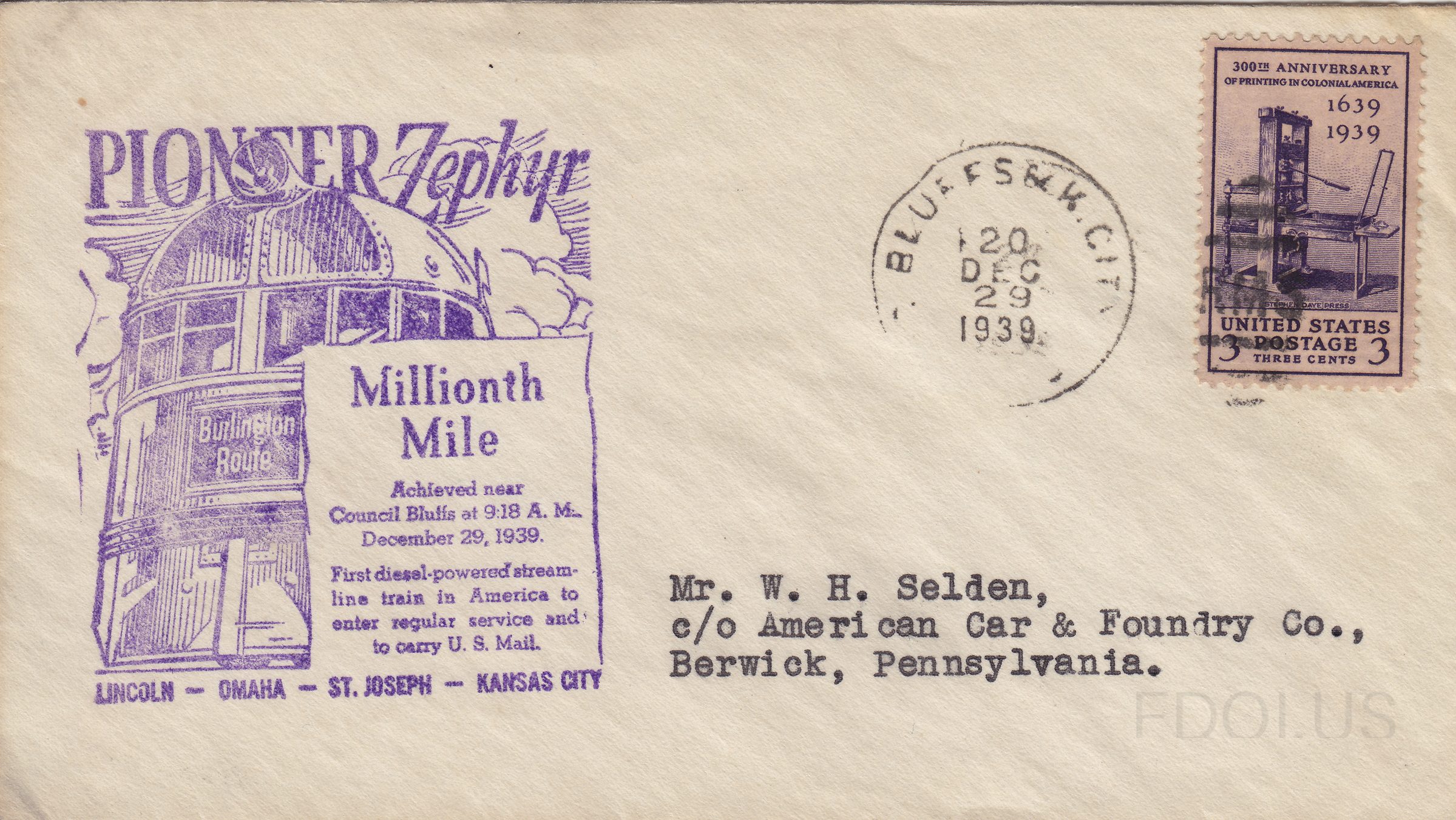
Purple cachet featuring the Burlington Route Pioneer Zephyr streamlined diesel train with rounded nose art, commemorating the Millionth Mile achieved near Council Bluffs at 9:18 AM on December 29, 1939. Text notes it was the first diesel-powered streamline train in America to enter regular service and carry U.S. Mail, with route cities listed: Lincoln, Omaha, St. Joseph, Kansas City. The stamp is the US 3-cent violet 300th Anniversary of Printing in Colonial America (1639-1939) depicting a colonial printing press. The postmark is a circular date stamp from Council Bluffs, Iowa dated December 29, 1939, with a hand cancel. Cover is addressed to Mr. W. H. Selden, c/o American Car & Foundry Co., Berwick, Pennsylvania.
Mistral
The cachet features purple artwork of the Pioneer Zephyr train with the text 'Millionth Mile' and 'Burlington Route.' It commemorates the train's achievement near Council Bluffs on December 29, 1939, at 9:18 AM, noting it as the first diesel-powered streamline train in America to carry U.S. Mail. The stamp is a 3-cent violet issue celebrating the 300th anniversary of printing in Colonial America (1639-1939), with a detailed illustration of an early printing press. The postmark is a circular cancellation from Council Bluffs, Iowa, dated December 29, 1939. The envelope is addressed to Mr. W. H. Selden in Berwick, Pennsylvania.
(The automatic summaries sometimes misidentify the postmark as part of the cachet artwork.)