Claude
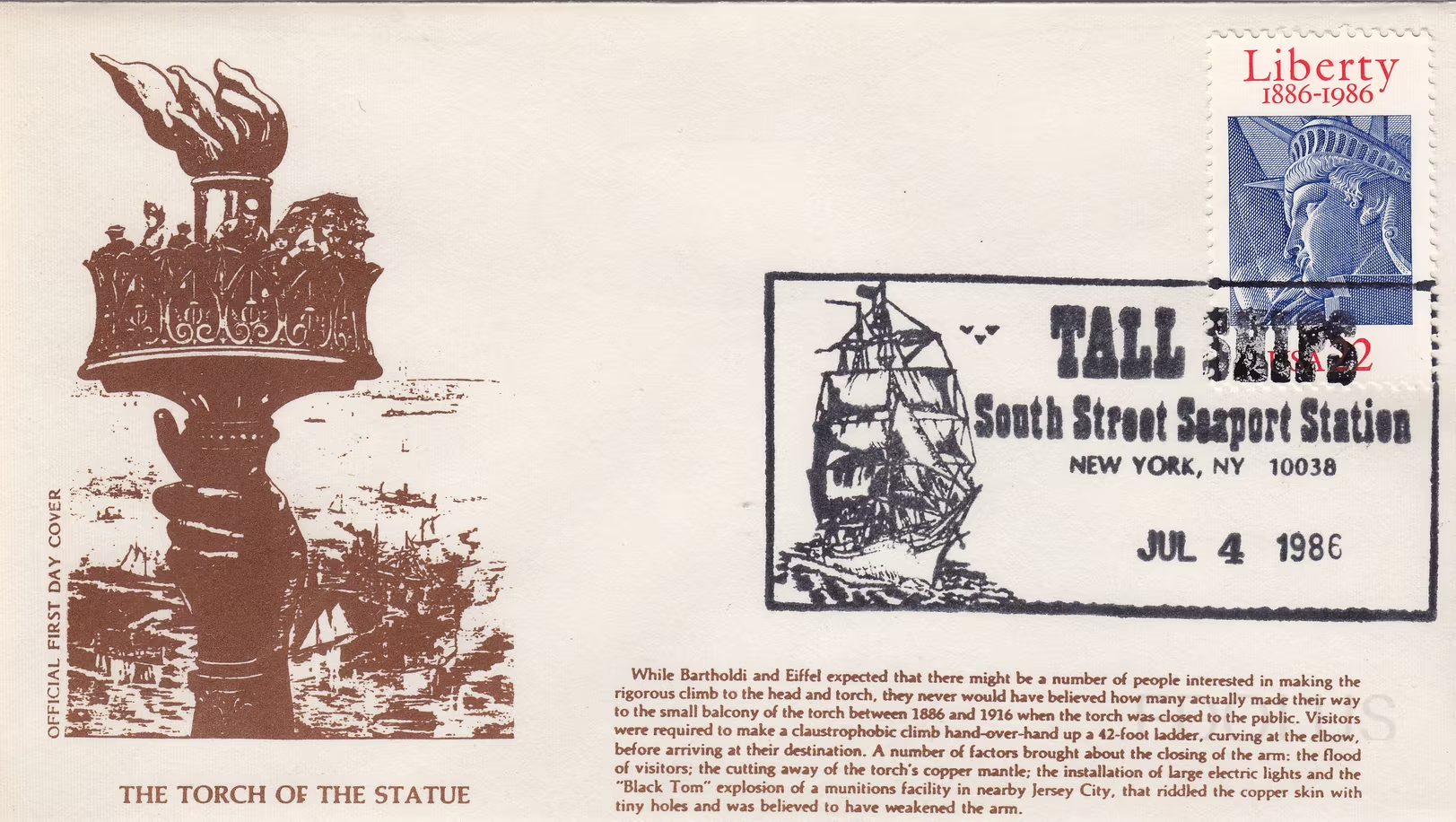
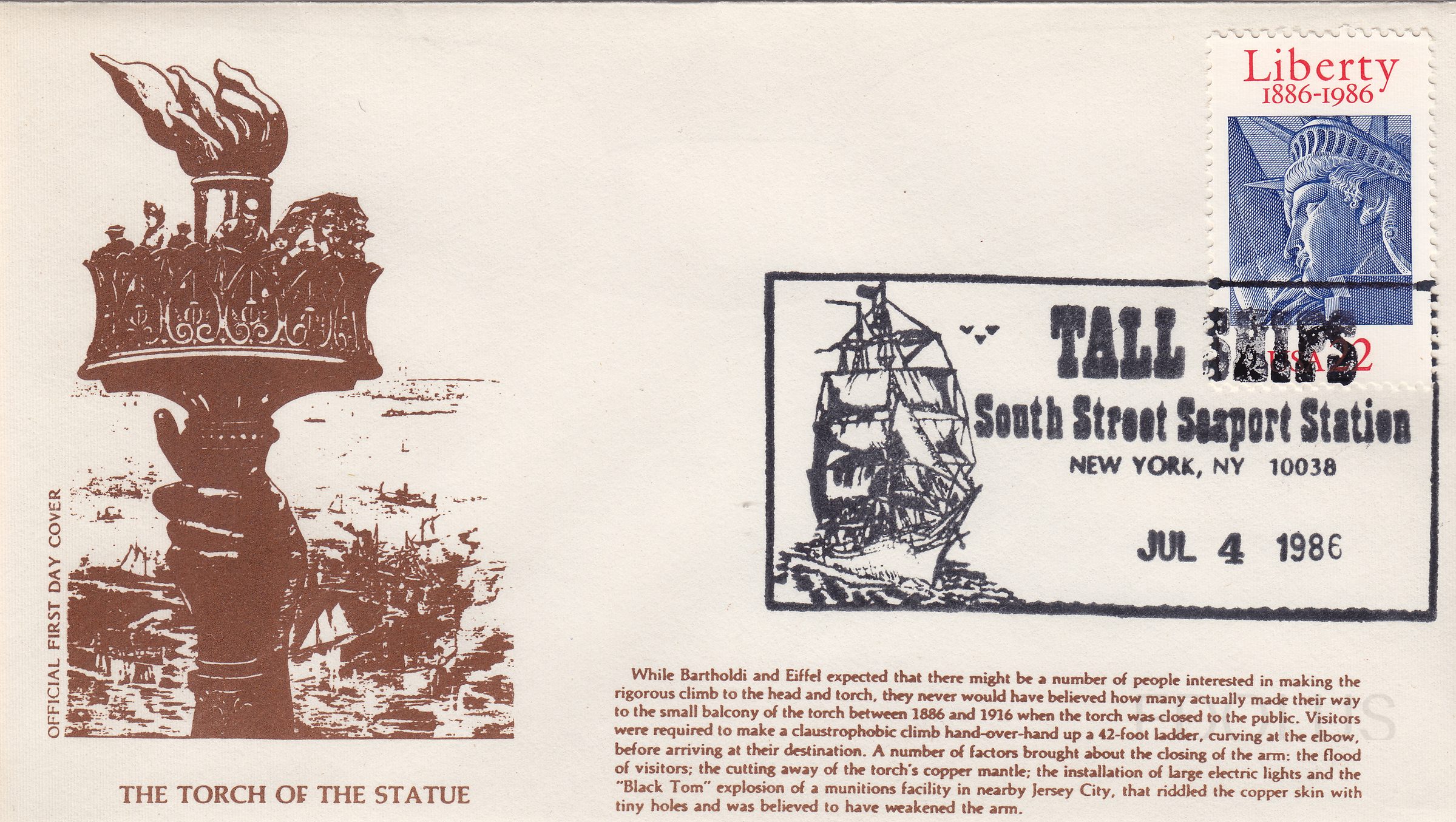
The cachet features a sepia/brown-toned illustration of the Statue of Liberty's torch held aloft, with visitors visible on the observation balcony and ships in the background below. The artwork is labeled 'THE TORCH OF THE STATUE' and 'OFFICIAL FIRST DAY COVER' in the left margin. The stamp is the 22-cent Liberty 1886-1986 commemorative (blue, depicting the Statue of Liberty's head) tied by a rectangular pictorial cancel featuring a tall ship under sail, reading 'TALL SHIPS / South Street Seaport Station / NEW YORK, NY 10038 / JUL 4 1986'. The lower right of the cover includes a printed text block about the history of the torch and visitor access. Condition appears excellent with crisp imagery.
Mistral
This First Day Cover features a sepia-toned cachet artwork of the Statue of Liberty's torch, with visitors climbing the torch's balcony and ships in the background. The 22-cent commemorative stamp in blue features a profile of the Statue of Liberty with the text 'Liberty 1886-1986.' The postmark is a pictorial cancellation from the Tall Ships celebration at South Street Seaport Station, featuring an image of a tall ship. The cover includes printed historical text about the Statue of Liberty and its creators, Bartholdi and Eiffel. The condition of the cover appears to be excellent, with clear and vibrant artwork and postmark.
(The automatic summaries sometimes misidentify the postmark as part of the cachet artwork.)