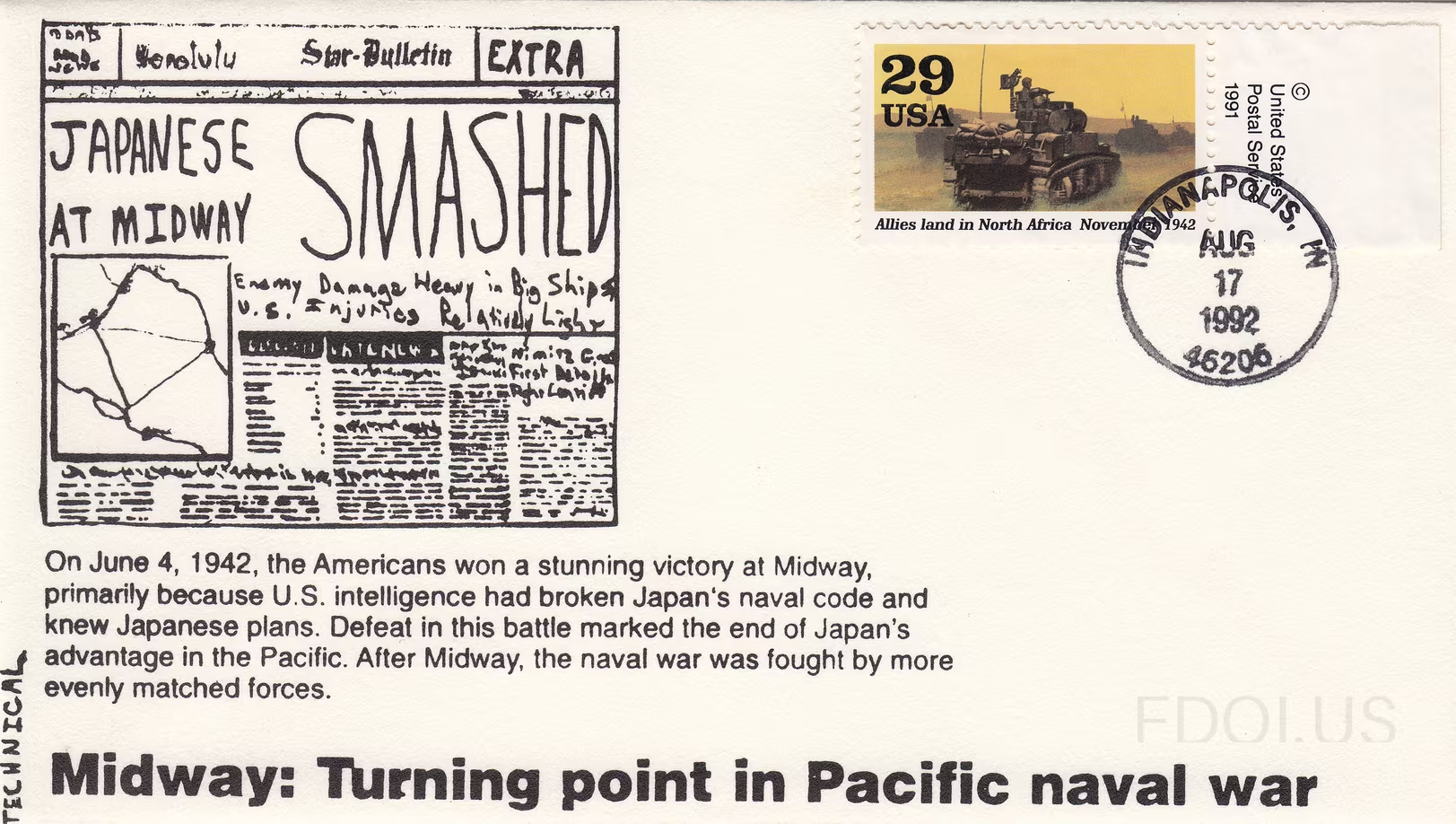
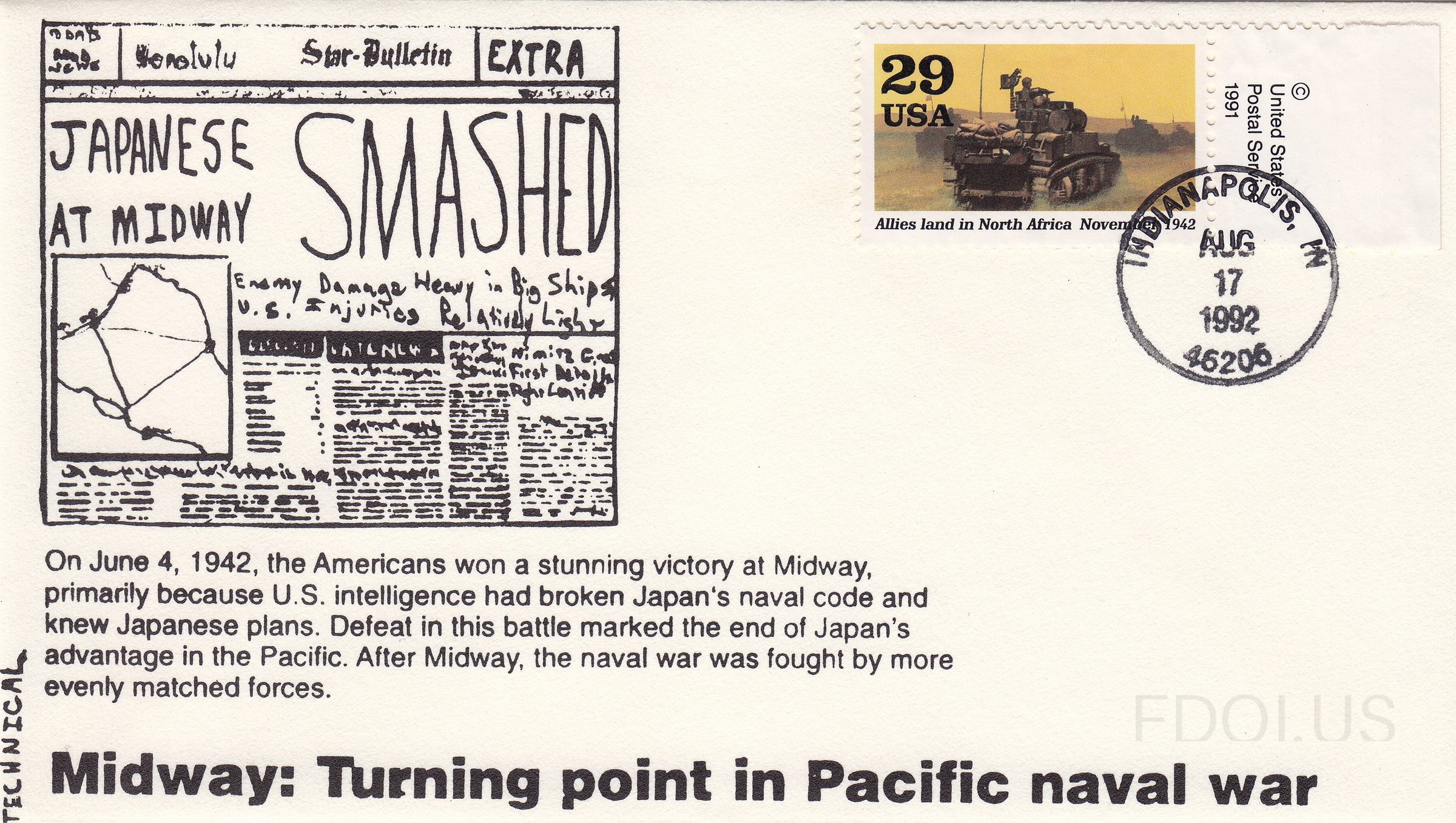
This Technical Cachets cover features a striking hand-drawn reproduction of the Honolulu Star-Bulletin's 'EXTRA' headline 'JAPANESE AT MIDWAY SMASHED,' commemorating the American naval victory at the Battle of Midway on June 4, 1942, which was achieved through U.S. intelligence's breaking of Japan's naval code. The 29-cent stamp (Scott 2697) depicts the Allied invasion of North Africa in November 1942, showing military vehicles advancing through desert terrain. Postmarked from Indianapolis on August 17, 1992, this retrospective commemorative honors two pivotal World War II turning points in the Pacific and North African theaters.
Claude
The cachet features a hand-drawn reproduction of the Honolulu Star-Bulletin 'EXTRA' newspaper headline reading 'JAPANESE AT MIDWAY SMASHED' with subheadlines about enemy damage and U.S. casualties. Below the newspaper illustration, printed text narrates the American victory at the Battle of Midway on June 4, 1942, noting that U.S. intelligence had broken Japan's naval code. The stamp is a 29-cent USA issue depicting Allied forces landing in North Africa in November 1942, showing military vehicles in a desert setting. The postmark is a machine cancel from Indianapolis, IN dated August 17, 1992.
Mistral
This First Day Cover features a detailed black-and-white cachet depicting a reproduction of the Honolulu Star-Bulletin's 'EXTRA' headline 'JAPANESE AT MIDWAY SMASHED,' commemorating the American victory at the Battle of Midway on June 4, 1942. The cachet includes a map of the Midway area and text describing the significance of the battle. The 29-cent stamp (Scott 2697) shows military vehicles advancing through desert terrain, representing the Allied invasion of North Africa in November 1942. The cover is postmarked with a circular cancellation from Indianapolis, IN, dated August 17, 1992. Additional text on the cover provides historical context about the Battle of Midway and its impact on the Pacific naval war.
(The automatic summaries sometimes misidentify the postmark as part of the cachet artwork.)