Claude
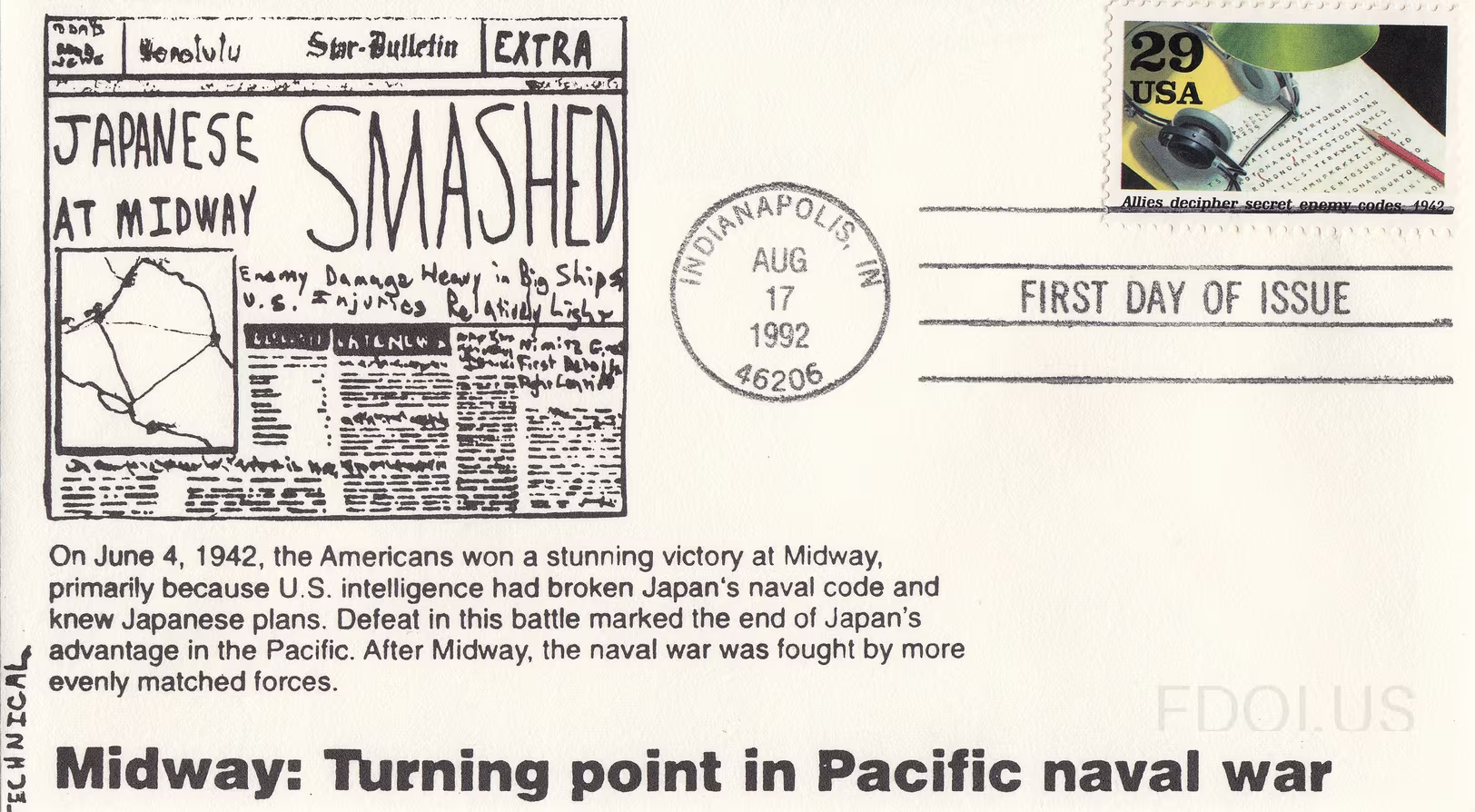
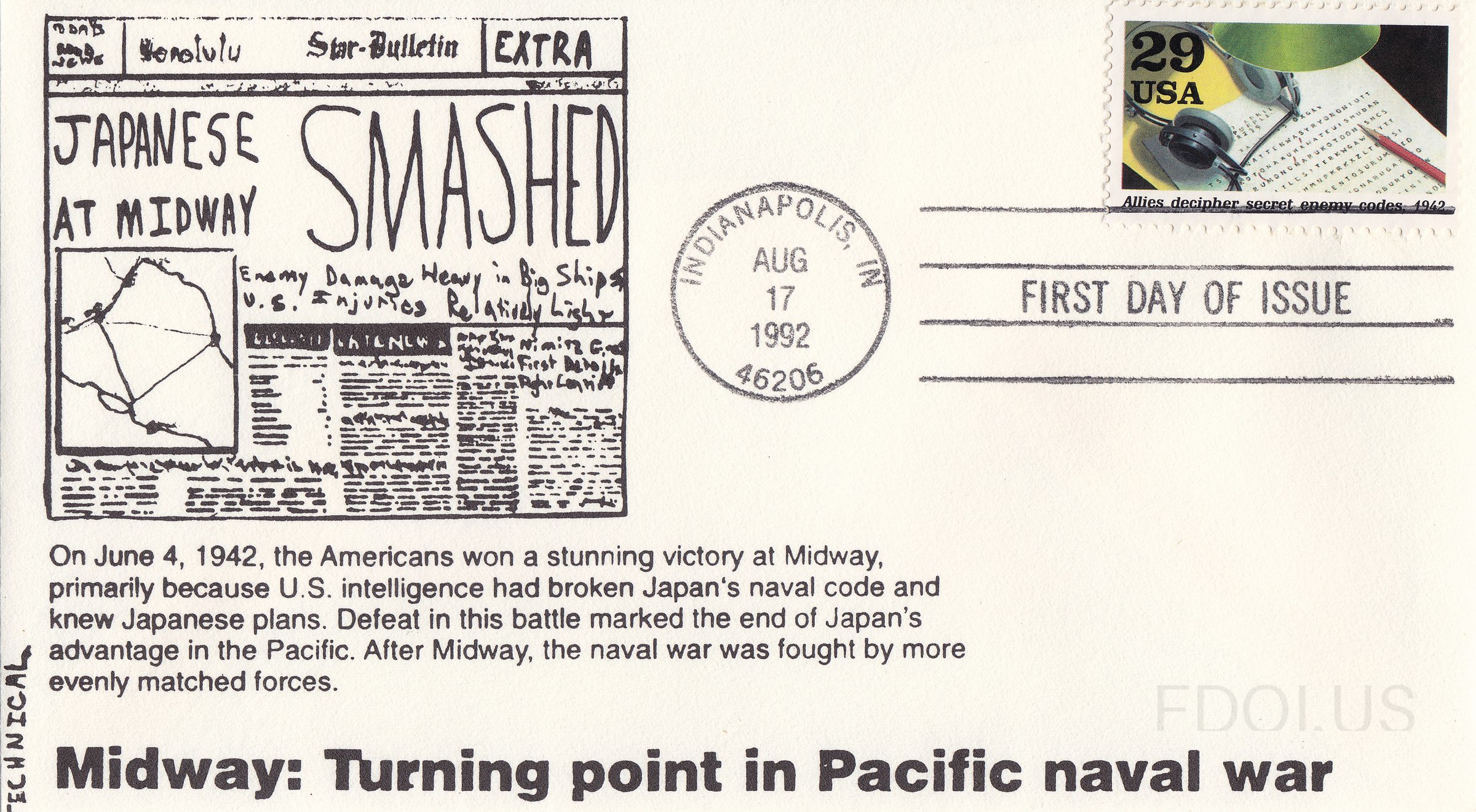
The cachet features a black-and-white illustration of a newspaper front page from the Honolulu Star-Bulletin with the headline 'JAPANESE AT MIDWAY SMASHED' and subheadings about enemy damage and U.S. casualties. Below the artwork is explanatory text describing the American victory at Midway on June 4, 1942, and the role of broken Japanese naval codes, with the title 'Midway: Turning point in Pacific naval war.' The 29-cent USA stamp depicts headphones, a pencil, and coded text, captioned 'Allies decipher secret enemy codes, 1942.' The postmark is a circular hand cancel from Indianapolis, IN dated August 17, 1992.
Mistral
This First Day Cover features a black-and-white cachet depicting a Honolulu Star-Bulletin newspaper headline announcing the American victory at the Battle of Midway on June 4, 1942. The cachet highlights the role of code-breaking in the battle, with a map and text excerpts from the newspaper. The 29-cent stamp shows a pair of headphones, a pencil, and encrypted text, symbolizing Allied code-breaking efforts during World War II. The cover is postmarked with a circular hand-cancel from Indianapolis, IN, dated August 17, 1992. Additional printed text describes the significance of the Battle of Midway and its impact on the Pacific naval war. The cover is in excellent condition.
(The automatic summaries sometimes misidentify the postmark as part of the cachet artwork.)