Claude
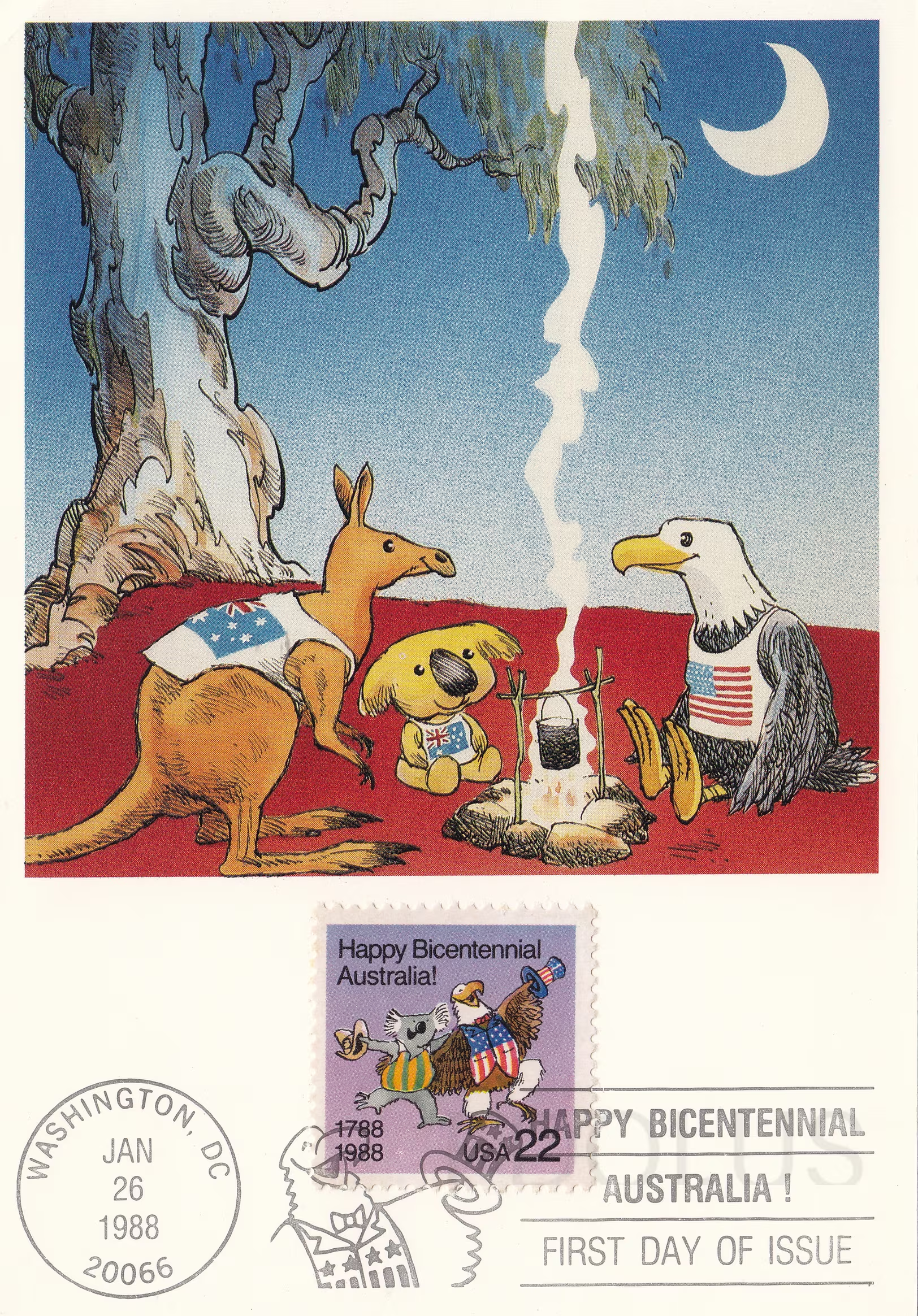
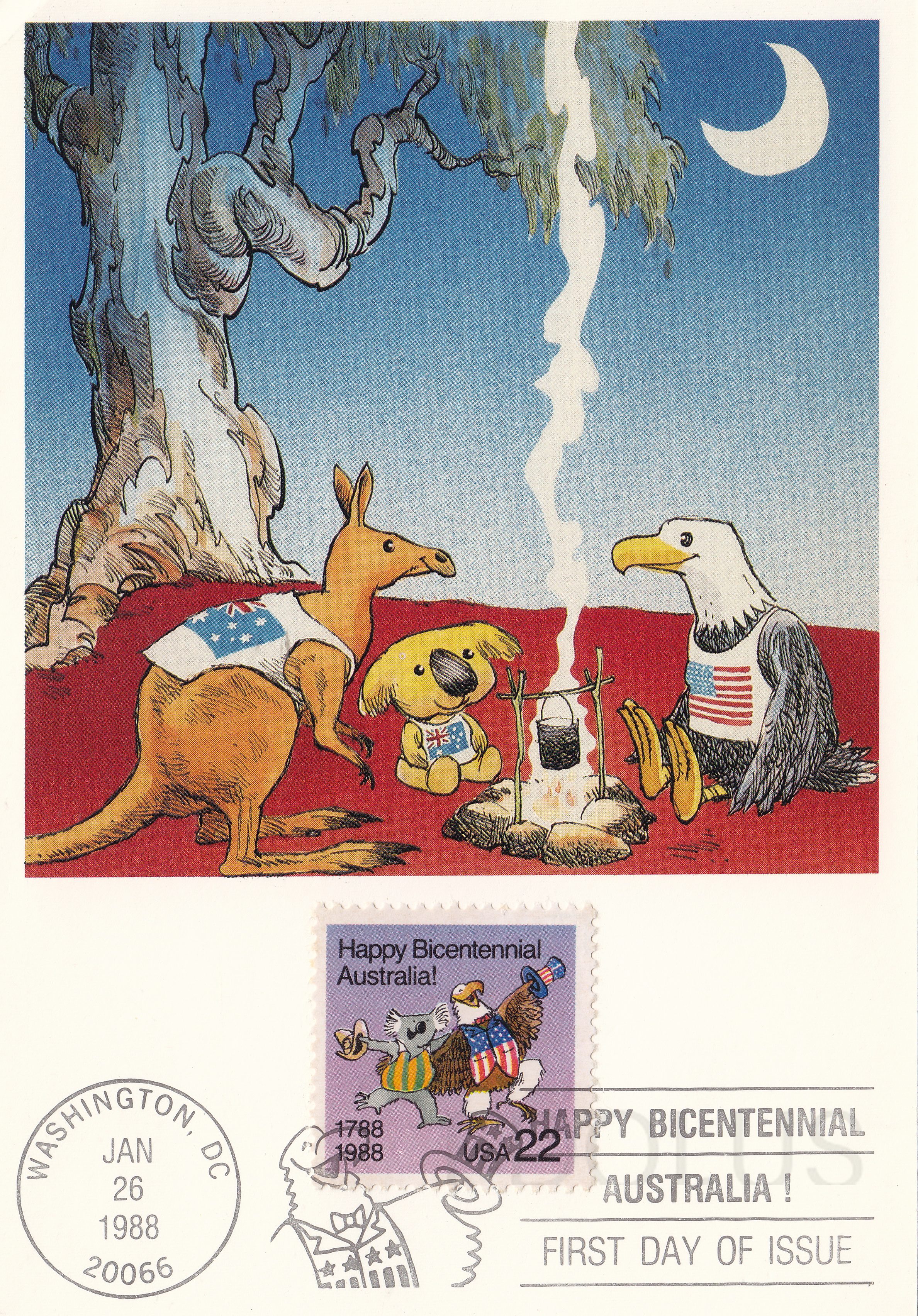
The cachet artwork, designed by syndicated cartoonist Pat Oliphant, depicts a humorous campfire scene set in the Australian outback under a crescent moon. A kangaroo wearing an Australian flag vest, a koala bear wearing an Australian flag shirt, and a bald eagle wearing an American flag vest gather around a small campfire with a pot hanging over it, beside a large eucalyptus tree. The stamp (USA 22¢, Scott #2370) shows cartoon figures of a koala and a bald eagle dancing together, inscribed 'Happy Bicentennial Australia! 1788-1988.' The postmark is a circular Washington, DC dated January 26, 1988 with ZIP 20066, accompanied by a pictorial cancellation featuring a small dancing figure and the text 'Happy Bicentennial Australia! First Day of Issue.' This is an official USPS maximum card (Item 808), catalog number 88-1.
Mistral
The cachet artwork features a whimsical outback scene with a kangaroo, koala, and bald eagle gathered around a campfire under a crescent moon and eucalyptus tree. The kangaroo and koala wear Australian flag-themed clothing, while the bald eagle wears an American flag vest. The 22¢ stamp depicts a koala and bald eagle dancing with 'Happy Bicentennial Australia! 1788-1988.' The postmark is a circular First Day of Issue cancellation from Washington, DC, dated January 26, 1988. The cover is in excellent condition with clear artwork, stamp, and postmark.
(The automatic summaries sometimes misidentify the postmark as part of the cachet artwork.)